
Monday, April 6, 2026
Hotel online presence: How to turn clicks into bookings


If your property is getting clicks but not bookings, your online presence may be costing you reservations.
Many innkeepers put time into attracting guests online, only to lose them when the booking process feels unclear or too difficult to complete.
That gap goes beyond traffic. Your website, content, guest reviews, and booking flow all shape whether a guest keeps moving forward or leaves to compare other options.
For independent properties, that challenge has become harder to manage. Guests expect a smoother experience at every step. Even small friction points can lead to abandoned bookings and fewer direct bookings.
Key takeaway: A strong online presence does more than attract attention. It helps remove friction so more guests complete the booking process.
Why hotel online presence has changed
A hotel’s online presence is no longer just about showing up in search. It includes your website, booking engine, content, and guest reviews, all of which shape how guests evaluate your property before booking.
Guests are researching more before they book
Travelers now spend more time comparing properties across search, OTAs, and review sites. They review photos, read feedback, and check policies before making a decision.
Today’s booking decisions are influenced by:
- Guest reviews and ratings
- Clear, updated photos
- Pricing transparency
- Ease of navigation and booking
That means visibility alone is not enough. Your digital presence now affects trust and whether a guest keeps moving forward.
Visibility now needs to lead to conversion
Search behavior has shifted, too. AI-driven results, local search, and mobile booking make it easy for guests to compare multiple properties quickly. A confusing website or unclear booking path can lead to abandoned bookings.
For independent properties, a strong online presence now needs to build trust, reduce friction, and help turn interest into direct bookings, not just generate clicks.

What actually drives bookings today
Getting guests to your site is only part of the process. What matters more is what happens next. In most cases, the strongest booking results come from getting a few essentials right.
Small details often shape whether a guest books or leaves. These are the areas that have the biggest impact:
- Website clarity and ease of use: Guests should quickly understand your property, your rooms, and what makes your stay unique.
- Booking engine experience: A smooth, simple booking engine makes it easier for guests to complete a reservation.
- Mobile friendliness: Many guests browse and book on their phones, so a poor mobile booking experience can reduce conversions.
- Pricing and availability transparency: Guests expect clear rates, policies, and availability.
- Reviews, photos, and trust signals: Strong guest reviews, updated photos, and consistent information build confidence.
When these elements work together, they create a smoother experience and a stronger path to direct bookings. Tracking conversion rate, bounce rate, and booking behavior can also show where guests drop off.
The most important areas to optimize
Improving results does not require a full redesign. Small changes in the right areas make a meaningful difference in website conversion and bookings.
Your website experience
Your website is often the first impression of your property. Guests should quickly understand what makes your stay unique and how to book.
If important details are hard to find, some guests may leave before they ever consider reserving. A slow or confusing site can create friction before they even reach your booking engine.
Your booking engine
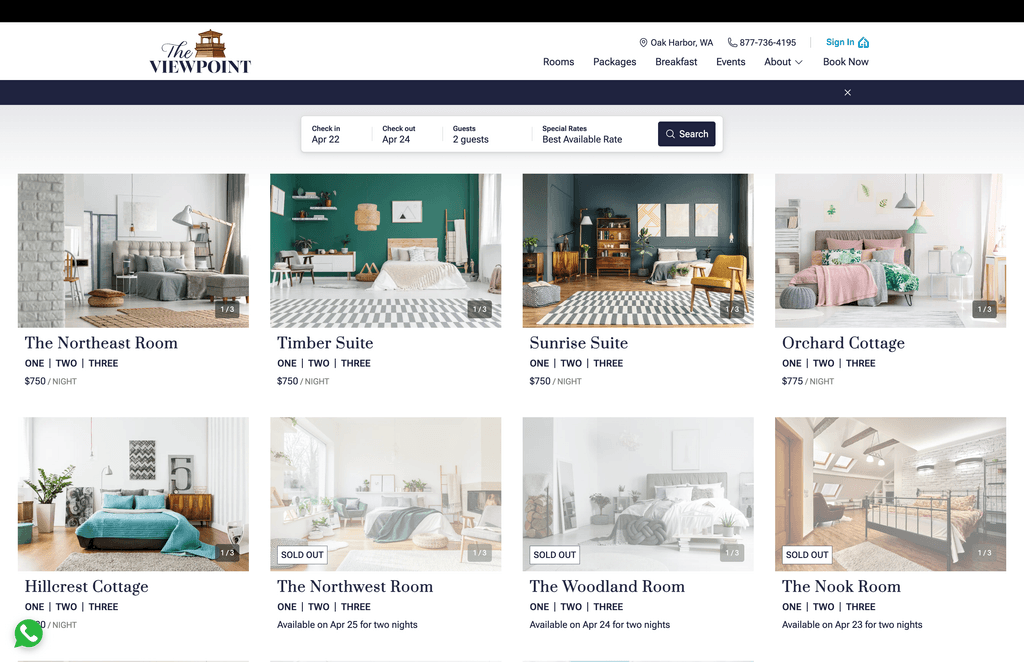
Your booking engine is where interest turns into revenue. The process should feel simple, fast, and transparent.
Too many steps, unclear pricing, or a weak booking path can lead to abandoned bookings. The easier it is to complete a reservation, the more likely guests are to finish it.
Your content and SEO
Content plays a bigger role in online visibility than it used to. Local guides, seasonal updates, and behind-the-scenes content help guests connect with your property before they book.
For many independent properties, consistency is the challenge. If you need assistance, ThinkContent helps keep content moving, making it easier to stay visible without adding to your workload.
Your reputation and trust signals
Travelers rely heavily on guest reviews, current photos, and accurate information when comparing properties.
Outdated images or inconsistent details create doubt and slow decision-making. Keeping those trust signals up to date makes it easier for guests to book with confidence.

Common mistakes that hurt bookings
A strong online presence can still underperform when small issues create friction for guests. In many cases, the problem is not visibility. It is what happens after someone lands on your site.
A few common issues tend to cause the most problems:
- Focusing only on traffic: More clicks do not guarantee more bookings.
- Weak mobile experience: A hard-to-navigate site quickly reduces mobile booking conversions.
- Unclear booking path: Guests shouldn’t have to search for rates, policies, or next steps.
- Outdated or inconsistent content and trust signals: Old photos, missing details, or inconsistent listings weaken trust.
Small friction points like these add up, making it harder for guests to complete a reservation even when they are interested.

FAQs about hotel online presence
These are some of the most common questions innkeepers ask when improving their online presence. Each one helps clarify what matters most for turning visibility into bookings.
What is a hotel online presence?
A hotel’s online presence includes everything guests interact with before booking, including your website, booking engine, content, listings, and guest reviews.
How can a hotel’s online presence increase bookings?
A strong online presence helps guests move from interest to action. Clear information, a better booking path, and stronger trust signals all support more direct bookings.
What makes a hotel website convert?
A high-converting website is easy to navigate, mobile-friendly, and clear about pricing, availability, and next steps.
How important is mobile booking for hotels?
Mobile booking matters because many guests research and compare properties on their phones. A weak mobile experience leads to lost bookings.
Turn your online presence into bookings
A stronger online presence does not require a full overhaul. Small updates to your website, booking path, and mobile experience make it easier for guests to move from interest to booking.
Start with the areas that create the most friction. Clearer content, easier navigation, and more transparent booking details all improve website conversion and support more direct bookings.
Consistency matters just as much. Updated photos, accurate listings, and steady content help keep your property visible and trustworthy over time.
ThinkContent helps ease that workload, so you can spend less time keeping up with content and more time running your property. That makes it easier to stay active online without adding another ongoing task to your plate.