Thursday, March 19, 2026
Google Hotel Ads and the future of direct bookings

To see the full webinar by Chris Anderson and obtain a copy of the By the Numbers study with questions for your property, please complete the form.
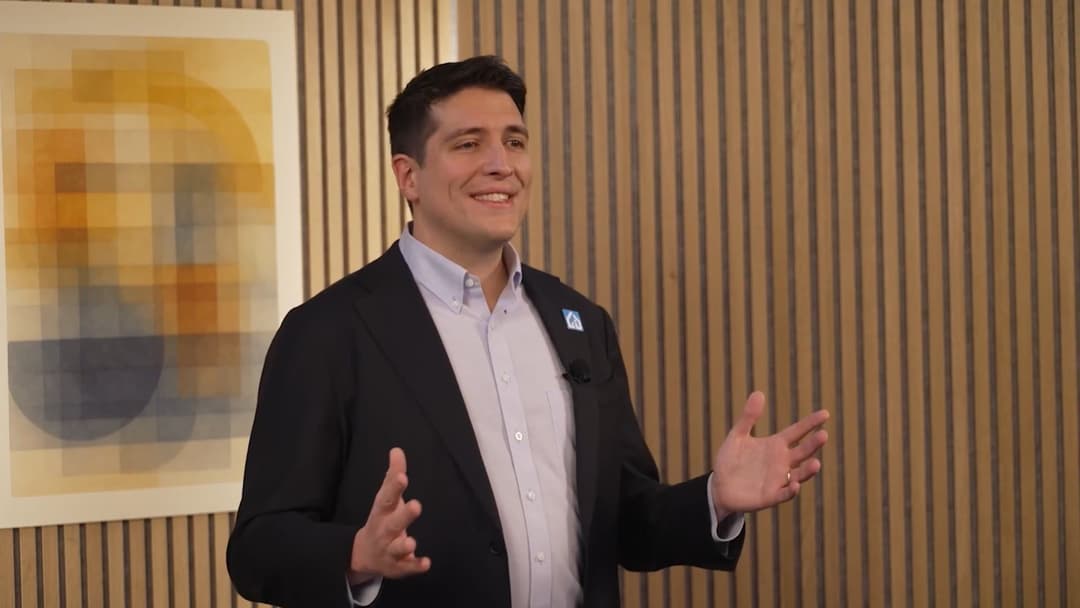
In this ThinkGrowth session, Cornell professor and innkeeper Chris Anderson shares results from a joint research project with ThinkReservations on how Google Hotel Ads impact demand and direct bookings for independent properties. He explains how OTAs dominate online travel, why price parity and above-the-fold visibility matter, and when it makes financial sense for hoteliers to lean into paid Google Hotel Ads (especially on mobile and during softer demand periods) versus relying on free listings alone.
By the Numbers: Independent Lodging Booking and Revenue Snapshot
Chris Anderson’s research looks at how independent properties show up when travelers search on Google, and when paid Google Hotel Ads are worth the spend. Our snapshot of reservations at properties using ThinkReservations, from August 2025 to July 2026, adds context on what happens once a guest decides where to book.
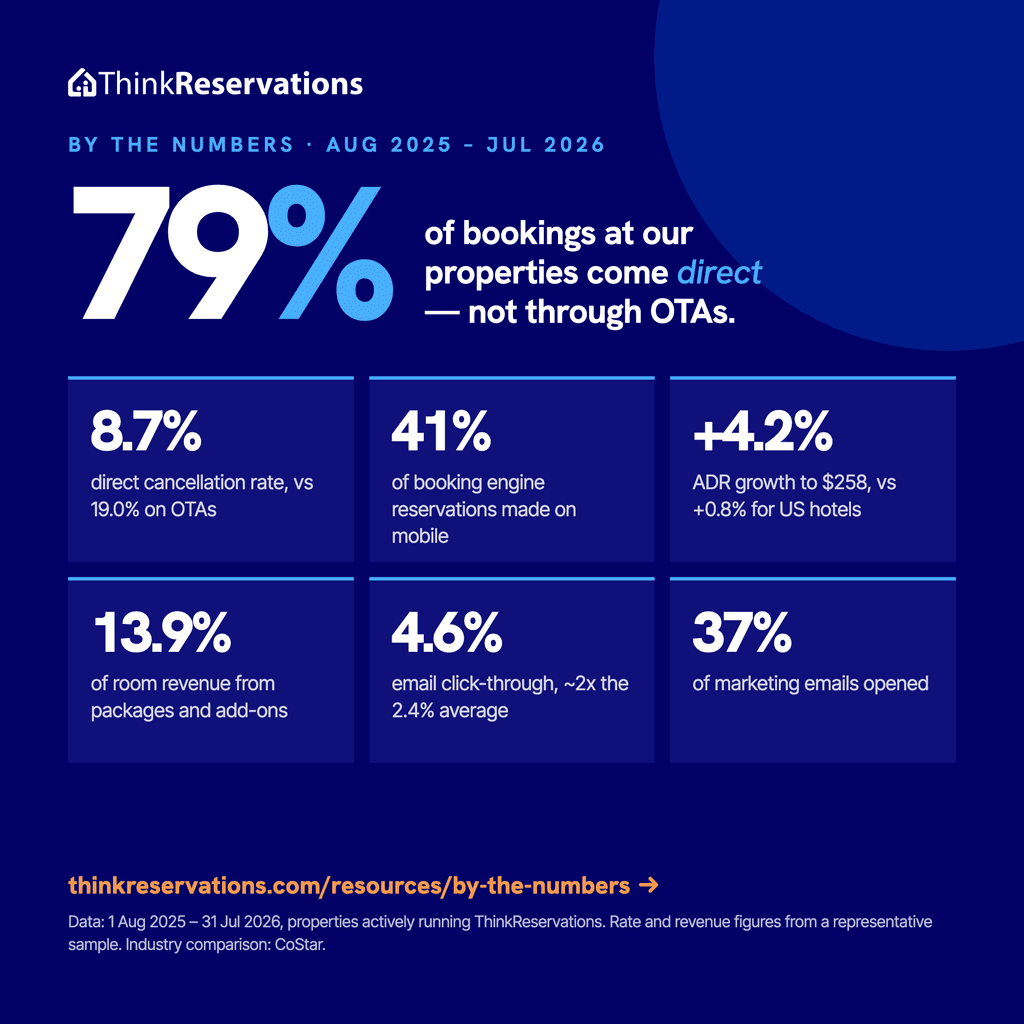
Across the properties in the analysis, 79% of reservations were made through direct channels, meaning not through online travel agencies. Chris’s session explains why that outcome isn’t automatic. OTAs dominate online travel, and whether a guest books direct often depends on whether your rate is visible and at parity where they’re comparing options.
Cancellation rates also differed by channel: 8.7% for booking-engine reservations and 19.0% for OTA reservations. Mobile devices accounted for 41% of booking-engine reservations, which matters for one of Chris’s key points: on a phone, there’s little room above the fold, and paid placement can decide who gets seen.
Average daily rate was $258, with 4.2% year-over-year growth in the analyzed sample. Chris suggests softer demand periods are where paid visibility is most likely to pay off. Knowing which weeks drive your rate is a good place to start.
The snapshot describes booking patterns across participating properties. It doesn’t isolate the effect of Google Hotel Ads. For that, watch the session above.
What it means
For independent operators, these numbers are more than metrics. They show what happens when a property owns its guest relationships instead of renting them from OTAs. Every direct booking keeps commission dollars in the business, where they can go toward a new hire, a room refresh, or simply a healthier margin in a tough season.
It also means you know who your guests are before they arrive, so you can personalize their stay, invite them back, and build the kind of loyalty a third-party listing never will. Across the 2,000+ boutique hotels, inns, and B&Bs that run on ThinkReservations, the pattern is consistent: when the booking engine, PMS, and channel manager work as one system, independent properties compete on their own terms and keep more of what they earn.
This is what happens when the booking engine, the website, and the PMS are one system rather than three tools taped together. Guests find you, book with you, and your property pays less in commissions. Location and repeat guests matter too. But none of it helps if your own booking path is the hardest one to use.
Questions for operators
- What share of your reservations come direct, and how does that change in slower months?
- When guests compare prices on Google, is your direct rate visible and at parity?
- How easy is it for a guest to finish a booking on your site from a phone?
- In your softest weeks, would paid visibility on Google cover its cost?
See the full snapshot → https://www.thinkreservations.com/resources/by-the-numbers
Related