
Friday, August 14, 2026
Before you publish that perfect property photo, read this


If you've used AI to generate or touch up photos on your website or booking engine, a new European law that took effect on August 2, 2026, may already apply to you even if you've never had a single guest book from the EU.
The good news: for most properties, compliance takes about five minutes and just requires a simple fix.
Here's what's going on, and what (if anything) you need to do about it.
Why does an EU law apply to non-EU businesses?
This comes from the EU AI Act, specifically Article 50, which addresses transparency regarding AI-generated content (i.e., labeling AI-generated content as such). The important part for non-EU businesses is how the EU decides who the rule applies to: it's based on who can see your content, not where your business is located.
If your website or booking engine is publicly accessible on the internet, it's visible to people in the EU. That alone is enough to trigger these new regulations. You don't need to run ads targeting Europe, translate your site, or accept euros. A normal, publicly viewable listing is enough.
If this sounds familiar, it's a pattern similar to GDPR, the EU's 2016 data privacy law that affected many businesses with no European footprint at all.

What actually needs a label, and what doesn't
This is the part that matters most day-to-day, and the good news is it's more forgiving than it might sound at first!
What this regulation doesn’t affect:
- A real photo of your actual guest room, lightly brightened, cropped, or color-corrected
- Standard touch-ups you'd have done in any photo editor for years
Likely needs a simple disclosure:
- A fully AI-generated image that doesn't actually look like (or exist at) your property
- Any photo where you’ve used AI to alter reality, like adding a mountain view that isn't there, or a renovation you haven’t done yet, etc.
The legal term for this is a "deepfake,” which sounds pretty dramatic, but in this context, it just means AI-generated content realistic enough that a viewer could reasonably mistake it for an authentic, unedited photo. This is important: intent doesn't matter. You don't have to be deviously trying to fool potential guests. If the image is AI-generated, the disclosure duty applies regardless of why you used it.
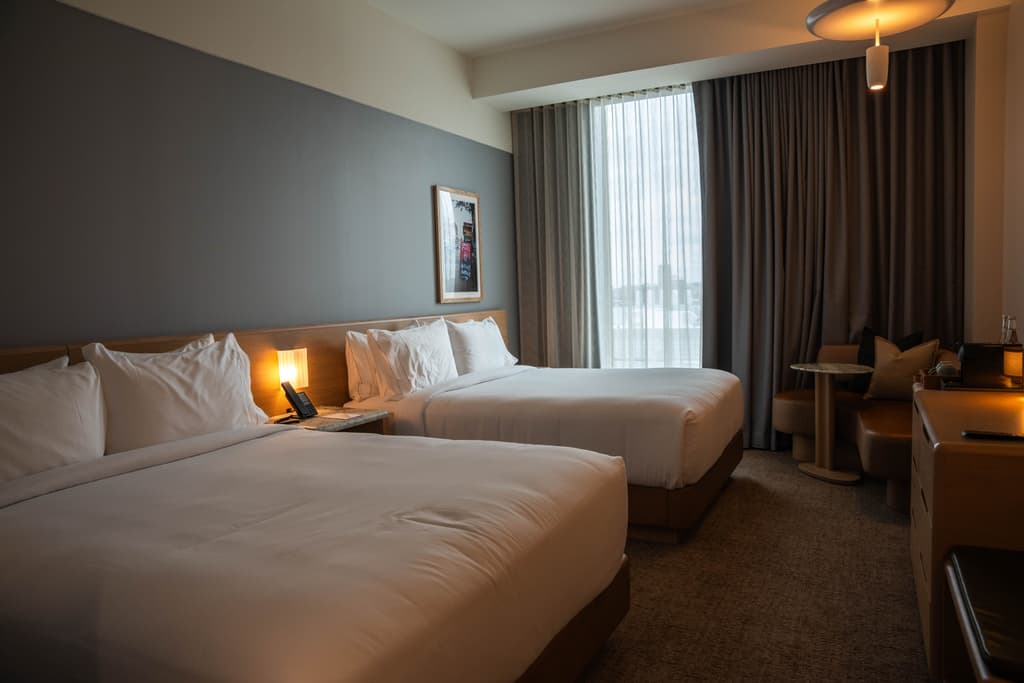
So what does compliance actually look like?
For images that fall into the "likely needs a label" category, add a small, visible disclosure, such as an "AI-generated" or "AI-enhanced" text tag near the image. The EU has even published a set of standard icons for this, though using them isn't required. A clear, honest label in your own words works just fine.
To be clear: you don't need to remove these images. This is a transparency requirement, not a ban. AI-assisted photography is completely fine to use — you just need to be upfront about it where it counts.
Important dates
- As of August 2, 2026, the rule is already in effect.
- On December 2, 2026, the grace period for certain technical marking requirements on tools already in use before August 2026 ends.
- Anything generated before August 2, 2026, doesn't need to be retroactively labeled; only content created from that date forward does.
Does being a small property get me out of this?
No. There's no small-business exemption from the rule. A ten-room property has the same disclosure duty as a 500-room one.
Where size does help is on the penalty side, if it ever came to that. Smaller businesses face a lower cap on fines than larger ones.
What to actually do this week
- Look through your website and booking engine photos. You’ll need to flag any that are fully AI-generated or AI-enhanced enough to make things look better than they really are. A great example is altering a beach to look totally clear of seaweed and changing the green shoreline to crystal blue.
- Add a simple, honest label to anything you flag. A small "AI-generated" caption or tag is enough. You can also use the EU icons.
- When in doubt, add the label: if a photo could reasonably be mistaken for an authentic, unedited shot of your property, you must label it.
This isn't legal advice. If you want real certainty, a quick conversation with an attorney is worth it. For most properties, though, this is a straightforward, easy fix.
The bigger picture
Beyond the legal ramifications, being honest about AI-generated imagery is just the right thing to do and helps ensure guest trust. Travelers who book a room expecting a certain view or fireplace and arrive to find neither exists will leave a bad review. Regulations aside, that's reason enough to label AI-generated or enhanced images clearly.
References & Further Reading
Transparency: EU AI Act — Commission Confirms Transparency Code of Practice as Adequate and Publishes Final Version of Its Guidelines on Transparency Obligations
EU-provided labeling icons: EU Icons for labelling AI-generated content