
Monday, February 16, 2026
Google Hotel Ads and what’s next for direct bookings

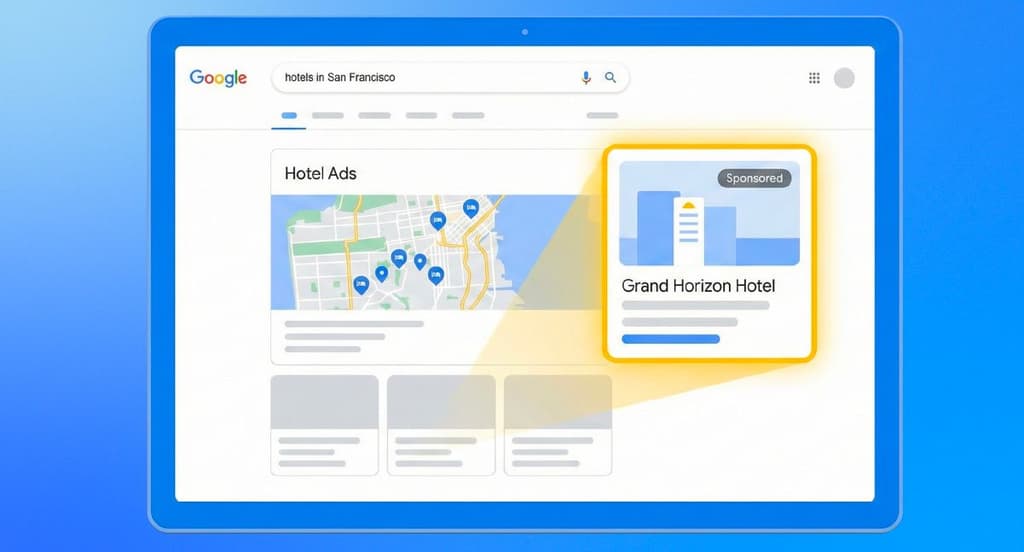
Have you ever searched your own property on Google and noticed online travel agencies showing up before you? Google Hotel Ads sit right in that comparison layer, where guests see prices side by side and decide quickly.
Last December, at our ThinkGrowth conference, Chris Anderson (professor at Cornell’s Peter and Stephanie Nolan School of Hotel Administration) shared research on how this comparison moment shapes booking outcomes. The data reveals how free booking links, paid placement, and rate parity influence who wins the click.
Let’s break down what guests actually see on Google, how Google Hotel Ads work, and what that means for your direct bookings.
How guests shop for hotels now
Guests no longer follow a straight path to booking. Most guests choose from the first few options they see. Many never scroll past the top results.
Most start with quick comparisons across Google, maps, reviews, and price grids, often jumping between them in minutes. Decisions happen earlier than many properties expect.
Visibility is concentrated in a very small space. Most shoppers choose from what they see first, and many bookings happen without scrolling far. If your property does not appear clearly in those early results, it may never enter the conversation.
At this stage, guests are not reading long descriptions. They are scanning for clear signals that feel accurate and trustworthy. Price, photos, and availability do the heavy lifting. When those elements line up, clicking feels easy.
Where Google Hotel Ads show up
Have you noticed how Google sometimes shows prices and booking options before you even reach a hotel website? That comparison layer is often powered by Google Hotel Ads. They are the hotel listings and booking links that appear when someone searches for a place to stay.
Google Hotel Ads can appear in Search results, in Google Maps, and in Google Travel. This matters because many guests make decisions right then and there as they compare options side by side. Online travel agencies (OTAs) appear in the same view, and direct booking links can appear as well if enabled.
This is one of the few places where booking decisions happen quickly and publicly. Showing up here puts your direct option in front of guests earlier, and it gives you a better shot at earning the click.
Free links vs paid ads
Google offers two ways to show your property in that comparison view. One is free booking links, and the other is paid placement. Both can appear at the same time, and understanding the difference matters.
Free booking links allow your direct rate to appear alongside OTAs at no cost. They give guests a way to book directly with you, but placement is limited. Paid ads sit higher and show more prominently, especially on mobile, where space is tight and choices are fewer.
What matters here is visibility. Free links help you show up, but paid ads can increase how often you are seen. For many independent properties, the question is not free or paid. It is when paid placement adds meaningful lift.
What the data shows about direct bookings
When properties appear in Google Hotel Ads, visibility does more than shift where a booking happens. It increases the likelihood that a property is considered in the first place. The research compares three setups: not showing up at all, showing free booking links only, and showing free links plus paid placement.
Here’s what the data shows:
- Properties visible in Google Hotel Ads saw higher overall booking demand
- Free links help, but paid ads can add extra lift
- Paid placement added incremental demand instead of replacing free clicks
- Strong visibility reduced the chance of guests defaulting to OTAs
- Accurate pricing and availability strengthened direct booking performance
The message is clear. Earlier visibility creates more opportunities to win the booking.
Why rate parity still matters
Rate parity can make or break a booking decision in a side-by-side comparison. This simply means your direct rate matches what guests see on OTAs.
When prices match, guests can focus on the experience and choose the booking path that best suits them. When an OTA shows a lower rate, even by a few dollars, price becomes the easiest tie-breaker. Many guests click the cheaper option and move on.
Google Hotel Ads makes this even more visible by displaying prices side by side in real time. Parity keeps your direct link competitive at the moment that matters most, and it protects your direct booking option without requiring more marketing effort.
When paid placement is worth it
Paid placement works best when travelers are actively comparing rates, and you have rooms available to capture that demand. It keeps you visible in the same side-by-side view where OTAs compete for the click. This matters because most travelers make quick decisions and often pick what they see first.
Paid placement tends to be worth it when:
- Your rooms are available on dates when people are actively searching
- OTAs regularly show above you in Google’s hotel comparison view
- Mobile is driving a large share of your traffic
- Guests are actively searching within a short booking window
- You have a clear goal and a defined campaign window
Paid placement works best as a tool, not a default setting. Used selectively, it helps you stay visible when it counts and protect more direct bookings without wasting spend.

A quick Google Hotel Ads checklist
If you only have a little time this week, focus on the updates that affect how you show up in Google’s hotel comparison results.
These quick checks support your online visibility and help your direct option compete more effectively.
- Confirm your free booking link is active, and the booking path works end-to-end
- Check rate parity for a few common dates, then fix any mismatches you find
- Search your property on Google Travel and Maps to see which links appear first
- Review your listing on mobile, since placement and scroll space are tighter
- Update a few photos and respond to one review, so your listing looks current
Pick one task and finish it. These small moves help you show up stronger where guests are actually deciding.
Where direct bookings go from here
Direct bookings are no longer won on your website alone. They are won earlier, in the comparison view, where guests scan prices and options, then choose quickly. Google Hotel Ads influence that decision point by shaping what guests see first and which booking paths feel easiest.
The good news — your marketing strategy does not require a full overhaul. Start by confirming your free booking link works, tightening rate parity, and keeping pricing and availability accurate across Google and OTAs. Add paid placement when it supports real demand and a clear goal, not as a set-it-and-forget-it tactic.
Want to see the full data and examples behind these strategies? Watch the ThinkGrowth session replay, then choose one update to implement this week. Small improvements in Google Hotel Ads visibility can lead to stronger direct bookings over time.